


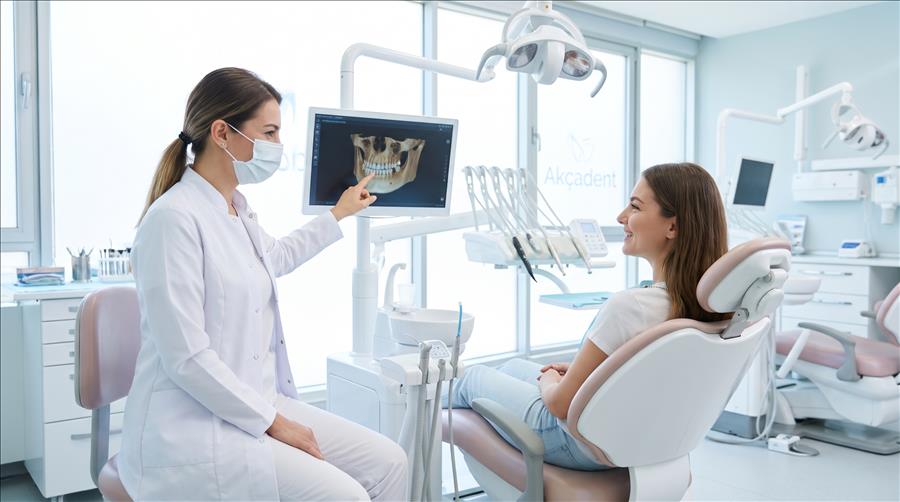
If you wake up with noticeable swelling in your cheek, severe throbbing pain in a tooth, or difficulty opening your jaw, your body is actively fighting a serious infection. Often postponed with the thought, "I will just take a painkiller and wait for it to pass," a tooth abscess and facial swelling is a true dental emergency that never heals on its own and carries the risk of rapidly spreading to surrounding tissues. Knowing the right first-aid steps and seeking immediate professional care protects both your tooth and your overall health.
What Is a Tooth Abscess and Why Does It Cause Facial Swelling?
A tooth abscess is an acute infection that develops when bacteria reach the tooth root or surrounding tissues—typically due to untreated deep cavities, fractured teeth, or advanced gum disease—forming a pocket of pus. When inflammatory pressure trapped inside rigid bone walls seeks an escape route, it infiltrates the soft tissues, causing visible facial swelling (cellulitis) in the cheek, lip, under the jaw, or around the eye.
In clinical practice, the primary local causes triggering a dental abscess include:
- Advanced Tooth Decay: Bacteria reaching the inner nerve tissue (pulp) and spreading from the root tip into the jawbone (periapical abscess).
- Severe Gum Disease: Bacteria accumulating inside deep periodontal pockets between the tooth and gums, creating a localized pocket of infection (periodontal abscess).
- Impacted Wisdom Tooth Infections: Food debris and bacteria trapped beneath the gum flap covering a partially erupted wisdom tooth (pericoronitis).
- Dental Trauma and Old Restorations: Teeth that have lost vitality due to an impact, or older fillings and crowns with marginal leakage.
What to Do at Home Before Seeing a Dentist (Safe First Aid)
A dental abscess can only be permanently resolved when a dentist drains the infection, cleans the root canal, or treats the affected tooth; however, safe supportive measures can help manage pain and swelling until your appointment.
| Action | What You Should Do (Safe) | Strictly Prohibited (Dangerous) |
|---|---|---|
| Compress Application | Apply a cold/ice pack externally to the cheek for 10 mins on, 10 mins off | Applying a hot water bottle or warm towel to your face or gums |
| Oral Hygiene | Gently rinse with warm salt water (half a teaspoon of salt in a glass of water) | Squeezing the swollen area or trying to pop it with a needle |
| Medication Use | Take appropriate pain relievers recommended by a doctor or pharmacist | Taking leftover antibiotics randomly or placing aspirin/alcohol directly on the tooth |
| Resting Position | Sleep with your head elevated on two pillows above body level | Lying completely flat or chewing hard foods on the infected side |
When Is Emergency Hospital or Clinic Intervention Required?
Due to anatomical proximity, oral infections can spread into vital spaces such as the neck, floor of the mouth, and eye socket. As the dental team at Akçadent Oral and Dental Health Polyclinic, we prioritize every toothache accompanied by facial swelling as an urgent clinical emergency and intervene immediately to control the infection at its source.
Seek Immediate Emergency Medical Care If Any of These Red-Flag Symptoms Occur:
- The swelling expands rapidly toward your neck, under your jaw, or up toward your eyelid,
- You experience noticeable difficulty swallowing, shortness of breath, or a sensation that your tongue is being pushed upward,
- A high fever above 38°C (100.4°F), chills, shivering, or severe systemic weakness develops,
- Muscle stiffness in the jaw (trismus) prevents you from opening your mouth wider than one or two fingers.
Dentist Note: The most dangerous mistakes patients make are applying a warm compress to a swollen cheek or taking random antibiotics recommended by a friend. Heat dilates blood vessels, accelerating the spread of infection into deeper tissues. Meanwhile, antibiotics alone cannot drain or eliminate an abscess pocket; they merely suppress symptoms temporarily, causing the infection to return far more aggressively if left untreated by a dentist.
Frequently Asked Questions
Can an abscessed tooth causing facial swelling be extracted immediately?
In cases of acute, widespread facial swelling, local anesthesia may not work effectively in heavily inflamed tissue, and immediate extraction carries a risk of spreading the infection. Your dentist will first drain the abscess and prescribe targeted antibiotic therapy to calm acute swelling; once the edema subsides, the tooth is safely treated with a root canal or extracted.
If a dental abscess ruptures on its own, is the danger over?
No. When an abscess drains into the mouth, the drop in pressure temporarily relieves pain, but the bacterial source inside the tooth or at the root tip remains active. Without professional treatment, the infection continues eroding the jawbone and can develop into larger cysts.
How many days after starting antibiotics does facial swelling go down?
Following proper clinical drainage and the right antibiotic prescription from your dentist, facial tightness and swelling typically begin to subside noticeably within 48 to 72 hours. Even after the swelling disappears, you must finish the entire course of prescribed antibiotics for the full duration directed by your dentist.