
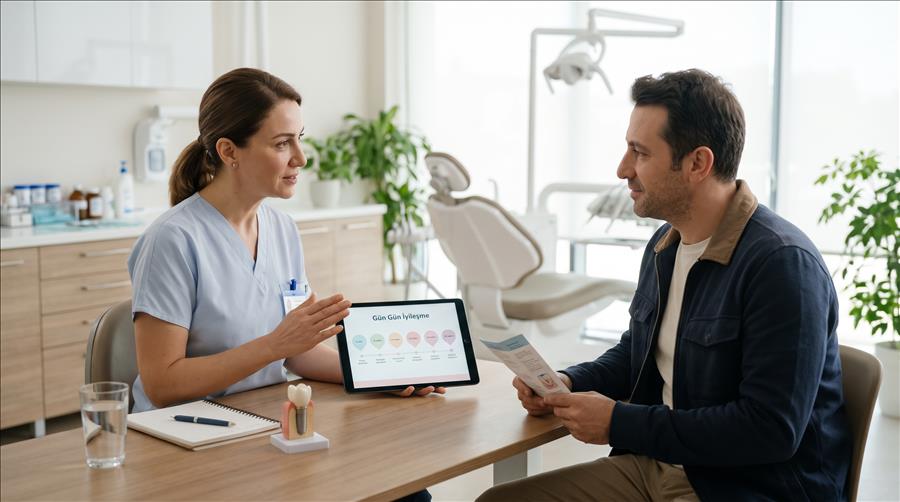
Understand the dental implant recovery stages day by day. Discover essential care tips, pain management, and swelling reduction from our expert dental team.
Once dental implant surgery is completed, patients almost always wonder about what lies ahead: "What should I expect during the recovery timeline, and how can I ensure seamless healing?" While modern surgical techniques make implant placement remarkably smooth and comfortable, long-term clinical success relies heavily on adhering to the correct post-operative protocols during early tissue healing.
What Is the Dental Implant Recovery Process (Osseointegration)?
Dental implant recovery is defined by osseointegration, the biological process where bone cells integrate directly onto the titanium implant surface, anchoring it firmly to the jawbone. While complete bone fusion typically takes between 2 to 6 months depending on bone density and site anatomy, the initial 48 to 72 hours represent the most critical window for soft tissue stabilization and blood clot retention.
The biological healing phases following implant surgery progress in distinct stages:
- Hemostasis and Clot Formation (First 24 Hours): Bleeding ceases and a vital blood clot forms at the surgical site, establishing the foundation for tissue regeneration.
- Early Inflammation and Epithelial Closure (Days 1–7): The body responds with controlled swelling and mild tenderness as the gingival margins begin to close over the osteotomy.
- Osseointegration and Bone Remodeling (Months 2–6): Osteoblasts synthesize new bone matrix along the implant surface, locking the fixture mechanically and biologically into the jaw.
Day-by-Day Dental Implant Healing and Care Guide
Each phase after implant surgery involves unique tissue responses and specific clinical care requirements. Following a day-by-day regimen protects the surgical site and prevents complications.
| Timeframe | Expected Clinical Signs | Key Actions to Take | Strictly Prohibited Actions |
|---|---|---|---|
| Day 1 (First 24 Hours) | Minor oozing, mild aching as local anesthesia wears off | Bite gauze for 30–45 mins, take prescribed analgesics, apply cold packs intermittently | Spitting, vigorous rinsing, using straws, eating hot foods, smoking |
| Days 2 & 3 | Facial swelling (edema) and mild bruising reach their peak | Consume lukewarm, puréed foods; sleep with head elevated on two pillows | Strenuous exercise, hot showers/saunas, brushing directly over the surgical site |
| Days 4 to 7 | Swelling and tightness visibly subside; tissue begins firming | Gently brush unaffected teeth; begin prescribed antiseptic mouth rinses if directed | Chewing crunchy or hard foods; touching or probing sutures with tongue or fingers |
| Days 7 to 14 | Soft tissues heal; normal daily comfort resumes | Attend post-op follow-up; suture removal (if non-resorbable) | Skipping check-up appointments; applying heavy chewing pressure on the implant area |
Golden Rules to Accelerate Implant Healing
Ensuring optimal comfort and maximizing implant integration requires following established post-surgical protocols. As the dental team at Akçadent Dental Clinic, we emphasize that dedicated home care is just as vital to treatment longevity as precise surgical execution.
Essential Rules for Smooth Healing:
- Protect the Blood Clot: Never rinse forcefully or spit during the first 24 hours. Negative oral pressure can dislodge the clot and trigger delayed healing or bleeding.
- Use Cold Compresses Correctly: Apply an ice pack externally to the cheek for 10 minutes on and 10 minutes off during the first 48 hours to minimize swelling and tissue bruising.
- Optimize Your Diet: Avoid spicy, acidic, crunchy, and hot items for the first week; choose soft, nutrient-dense options like lukewarm soups, yogurt, scrambled eggs, and smoothies.
- Refrain from Tobacco Products: Smoking constricts microvascular blood flow, starving the surgical site of oxygen and significantly increasing the risk of implant failure.
Dentist Note: Developing localized swelling and minor cheek discoloration 48 to 72 hours after surgery is a normal physiological healing response and not a cause for alarm. However, if you experience throbbing pain that intensifies after Day 4, a persistent fever, or purulent discharge with a foul taste, contact your dental clinic immediately.
Frequently Asked Questions
When are sutures removed after dental implant surgery?
If non-resorbable surgical sutures were placed, they are typically removed quickly and painlessly during your follow-up visit between Days 7 and 10. Resorbable sutures usually dissolve on their own within 2 to 3 weeks.
When can I eat solid food after receiving an implant?
You may consume lukewarm, soft foods as soon as local anesthesia wears off completely (usually within 2 to 3 hours). Solid foods can be reintroduced gradually after approximately one week, provided you chew exclusively on the opposite side of your mouth.
How long does pain last after implant surgery?
Mild to moderate discomfort usually peaks within the first 48 hours and is readily managed with standard prescribed painkillers. By Day 3 or 4, residual soreness decreases significantly, allowing you to resume normal daily activities.
