
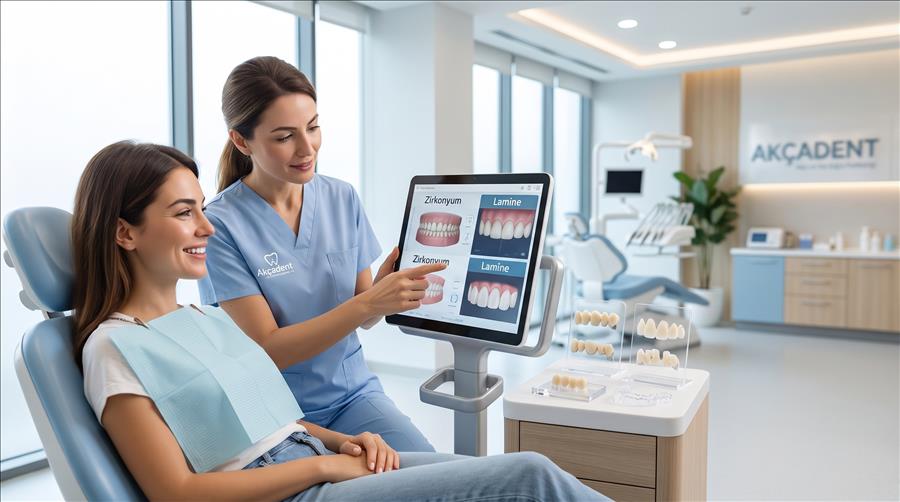
Compare zirconia crowns and porcelain veneers in aesthetics, durability, and tooth prep to choose the best cosmetic dental solution with our expert guide.
When you look in the mirror and feel dissatisfied with the color, alignment, or shape of your teeth, modern cosmetic dentistry offers dependable solutions to design your ideal smile. However, patients planning a smile makeover frequently face the same dilemma: Should you choose zirconia crowns or porcelain veneers? While both treatments deliver lifelike, radiant aesthetics, they serve distinct dental needs regarding biological tooth preservation, material strength, and overall functional demand.
What Are Zirconia Crowns and Porcelain Veneers?
A zirconia crown is a full-coverage restoration fabricated from high-strength zirconium dioxide that encases the entire tooth, whereas a porcelain veneer is an ultra-thin ceramic shell bonded exclusively to the front surface. Zirconia is defined by its structural load-bearing capacity, while veneers prioritize minimal invasiveness and maximum enamel preservation.
The core clinical features of each option include:
- Zirconia Crowns: Engineered to withstand heavy biting forces without metal frameworks, offering strong biocompatibility and warm translucency that closely replicates natural dentin. They are predominantly indicated for structurally compromised or posterior teeth.
- Porcelain Veneers (Laminates): Delicate glass-ceramic shells averaging 0.3 to 0.7 mm in thickness that require minimal enamel reduction. Their exceptional optical properties transmit and reflect light identically to natural dental enamel, making them the gold standard for front-tooth aesthetics.
Zirconia vs. Veneers: Key Differences
The primary clinical distinctions between zirconia restorations and porcelain laminates revolve around tooth preparation volume, mechanical resilience, and regional indications. Evaluating the remaining tooth structure is the single most critical factor in this selection.
| Feature | Porcelain Veneers | Zirconia Crowns |
|---|---|---|
| Enamel Reduction | Minimal (0.3 - 0.7 mm, facial surface only) | Circumferential (1.5 - 2 mm, all surfaces) |
| Translucency & Optics | Exceptionally high (closest match to natural enamel) | High (natural with realistic optical depth) |
| Fracture Resistance | Optimized for anterior shearing forces | Superior resistance against heavy posterior chewing forces |
| Common Indications | Anterior aesthetic zone | Anterior & posterior teeth, bridges, extensive structural loss |
Which Option Is Right for Your Smile?
Determining the right restorative approach requires evaluating your aesthetic goals, occlusal habits, and baseline periodontal health. As the dental team at Akçadent Dental Clinic, our priority is always to preserve as much healthy natural tooth structure as possible before considering full-coverage restorations.
Porcelain Veneers Are Best Suited For:
- Mild anterior crowding, minor tooth rotations, or gaps (diastemas),
- Severe intrinsic discolorations that do not respond to professional teeth whitening,
- Superficial enamel chips, uneven edges, or minor anatomical asymmetries,
- Patients with substantial healthy enamel who seek maximum aesthetic improvement with minimal tooth preparation.
Zirconia Crowns Are Best Suited For:
- Teeth with extensive structural breakdown due to root canals, recurrent decay, or large failing restorations,
- Edentulous spaces requiring durable multi-unit dental bridges,
- Posterior premolars and molars where chewing loads demand maximum fracture toughness,
- Cases involving moderate to severe bruxism (teeth grinding), typically complemented by a protective night guard.
Dentist Note: In modern smile design, there is no universally superior material—only the right material for your specific biological conditions. When sufficient healthy enamel is intact, porcelain veneers remain our first choice to preserve tissue. However, when a tooth is compromised, zirconia acts as a protective shield that stabilizes the tooth and extends its functional lifespan.
Frequently Asked Questions
Do porcelain veneers chip, break, or come off easily?
When bonded to sound enamel using advanced resin adhesives, veneers fuse micromechanically with the tooth and will not detach on their own. Avoiding non-masticatory habits, such as biting hard objects or opening packaging with your teeth, ensures they remain intact and functional for many years.
Do zirconia crowns look artificial or too opaque?
Modern multi-layered and high-translucency zirconia formulations mimic the subtle gradient and light reflection of natural teeth. Unlike older metal-fused crowns, they contain no dark metal core, eliminating unsightly gray lines along the gumline.
How long do zirconia crowns and veneers last?
With consistent daily oral hygiene (regular brushing and flossing) along with routine biannual dental examinations, both porcelain veneers and zirconia restorations reliably function for 10 to 15 years or longer without significant degradation.
