
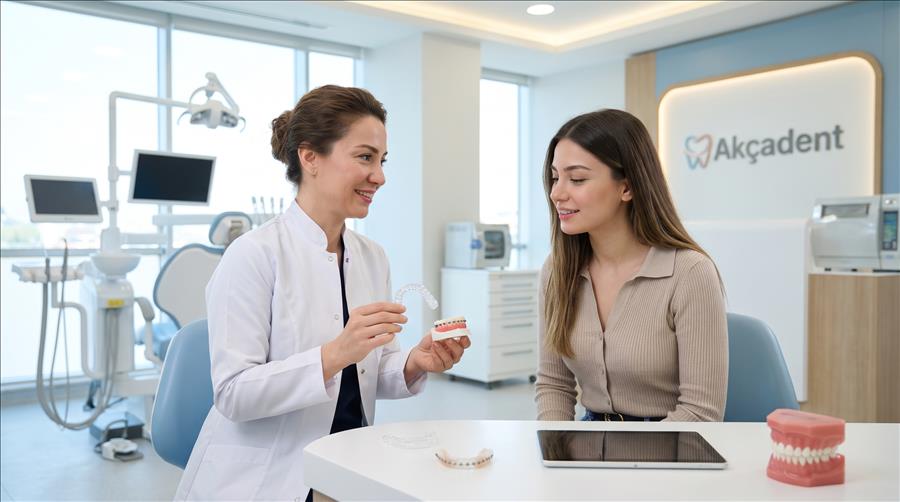
Compare clear aligners and traditional braces in aesthetics, comfort, and treatment time to choose the best orthodontic option with our comprehensive guide.
When considering orthodontic treatment to achieve straight teeth and a confident smile, many individuals hesitate due to the appearance of prominent metal brackets and wires. Advances in modern digital orthodontics now offer virtually invisible alternatives to conventional systems. Choosing between clear aligners (such as Invisalign) and traditional braces depends on your clinical malocclusion, lifestyle demands, and day-to-day routine.
What Are Clear Aligners and Traditional Braces?
Clear aligners are custom-molded, removable thermoplastic trays designed from 3D digital intraoral scans to gradually reposition teeth, whereas traditional braces are fixed orthodontic appliances consisting of metal or ceramic brackets bonded to the teeth and connected by archwires. Aligners prioritize aesthetic discretion and ease of oral hygiene, while fixed braces provide precise continuous mechanical force for complex skeletal movements.
The primary clinical mechanisms of each method include:
- Clear Aligners: Custom-fabricated aligner series deliver calibrated, gentle forces to guide teeth into alignment in successive stages. Because they are removable during eating, brushing, and flossing, they offer maximum lifestyle flexibility.
- Traditional Fixed Braces: Brackets, archwires, and elastomeric ligatures maintain constant biomechanical traction. As a bonded appliance, the treatment works uninterrupted 24 hours a day without relying on patient compliance for tray wear.
Clear Aligners vs. Metal Braces: Key Differences
The main differences between clear aligners and traditional braces involve visual prominence, daily comfort, maintenance of oral hygiene, and the level of patient compliance required. Selecting the right modality requires weighing personal daily habits alongside diagnostic orthodontic criteria.
| Feature | Clear Aligners (Invisalign) | Traditional Braces |
|---|---|---|
| Aesthetics & Visibility | Nearly invisible, clear medical-grade polymer | Noticeable metal or tooth-colored ceramic brackets |
| Removability | Fully removable for meals and oral hygiene | Fixed in place; removed only by the orthodontist |
| Dietary Restrictions | None (trays are removed prior to eating) | Hard, crunchy, chewy, and sticky foods are restricted |
| Oral Hygiene Maintenance | Unchanged routine (standard brushing and flossing) | Requires orthodontic flossers and interdental brushes |
| Patient Compliance | Crucial (must be worn 20 to 22 hours per day) | Passive (system remains active at all times) |
Which Orthodontic Treatment Fits Your Needs?
Determining the optimal orthodontic approach involves evaluating the degree of dental crowding, bite discrepancies, and your readiness to follow daily wear protocols. As the dental team at Akçadent Dental Clinic, our objective is to achieve a stable, functional occlusion and an aesthetic smile through the least disruptive, most biologically sound treatment path.
Clear Aligners Are Typically Indicated For:
- Adults and teens who prefer discreet treatment without visible brackets in professional or social settings,
- Mild to moderate dental crowding, spacing (diastemas), and minor rotational corrections,
- Orthodontic relapse cases where teeth have shifted slightly following past treatment,
- Disciplined patients who consistently commit to wearing the aligners for 20 to 22 hours every single day.
Traditional Braces Are Typically Indicated For:
- Severe skeletal malocclusions, significant jaw discrepancies, or severe tooth rotations,
- Complex multidisciplinary cases involving impacted teeth (such as canines) that require surgical exposure and traction,
- Younger adolescents or patients prone to misplacing removable trays or neglecting wear schedules,
- Cases requiring a cost-effective, dependable treatment modality.
Dentist Note: Clear aligner technology can now correct complex bite issues with the help of composite attachments and intermaxillary elastics. However, treatment success hinges entirely on patient adherence. If aligners are not worn for the required 22 hours each day, teeth will not track properly along the planned digital movement path, leading to treatment delays and mid-course refinements.
Frequently Asked Questions
Is clear aligner treatment faster than traditional braces?
For mild to moderate malocclusions, clear aligners can often achieve targeted movements in slightly less time due to direct computer-aided force application. In severe or highly complex bite cases, overall treatment durations for both modalities are generally comparable.
Do clear aligners affect your speech?
When starting a new set of trays, a slight lisp or feeling of bulkiness around the tongue may occur temporarily. The oral tissues and tongue typically adapt within 2 to 3 days, restoring normal speech patterns.
Can you drink coffee, tea, or soda with aligners on?
No. Aligners should only remain in place when drinking plain, cool water. Warm or hot beverages can warp the polymer material, while pigmented or sugary liquids can seep under the trays, staining the plastic and creating a heightened risk for enamel demineralization and decay.
